findit
lost & found mobile app
a community-driven mobile app that helps college students recover misplaced items through structured posting, tagging, and verification.

Overview
FindIt is a mobile app designed to help college students locate misplaced items more efficiently through a centralized, campus-specific platform.
Problem
Existing methods like Facebook groups and physical lost and founds are fragmented, unorganized, and unreliable, making it difficult for students to recover lost items.
Research & interview insights
- •Facebook groups are cluttered and posts get buried quickly
- •Lost and found locations are fragmented and operate on limited hours
- •There is no reliable way to verify item ownership
- •Students want a faster, more structured recovery process
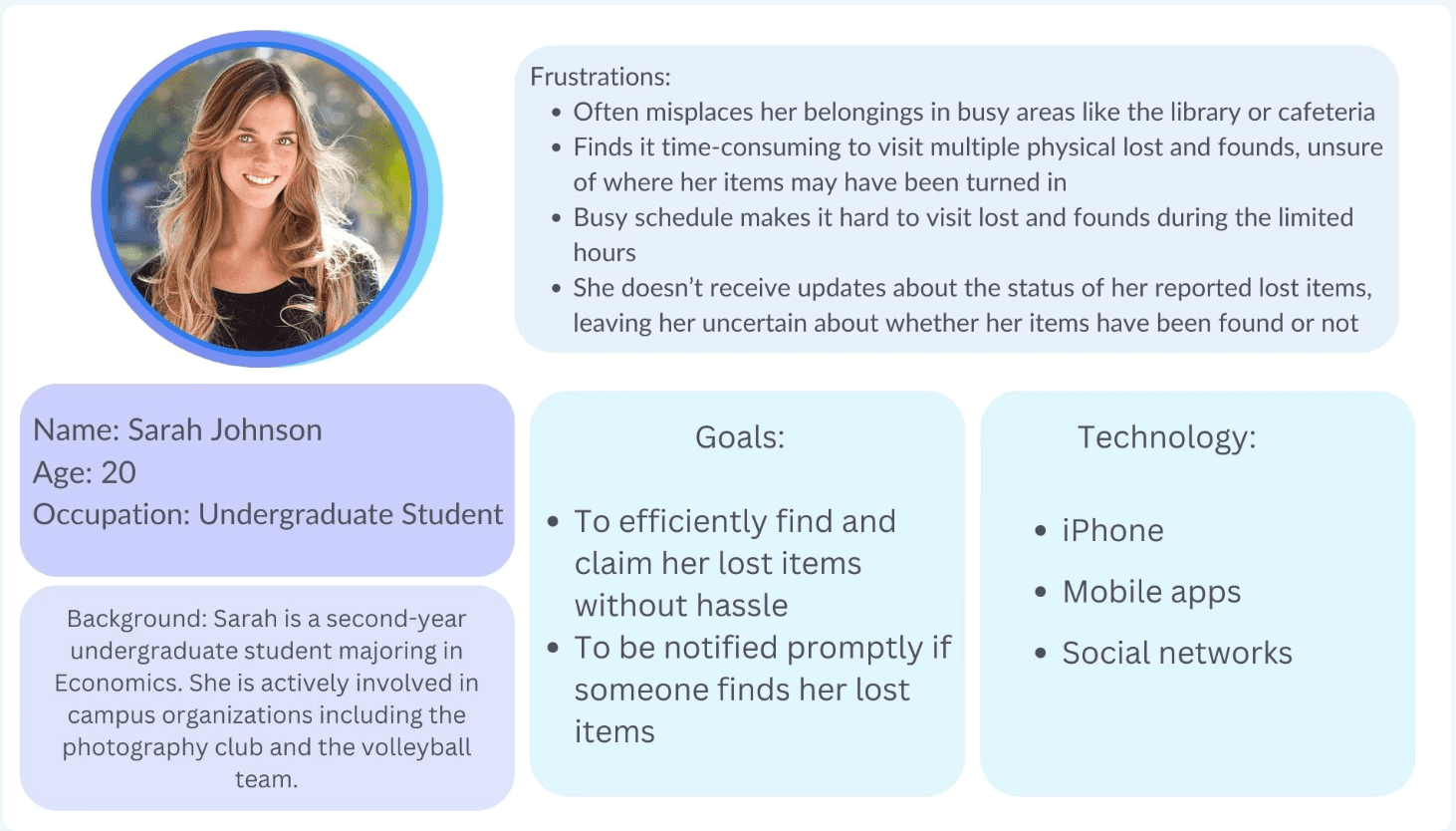
User persona
Personas helped focus design decisions around student pain points, stress levels, and recovery goals, ensuring a seamless and intuitive experience.
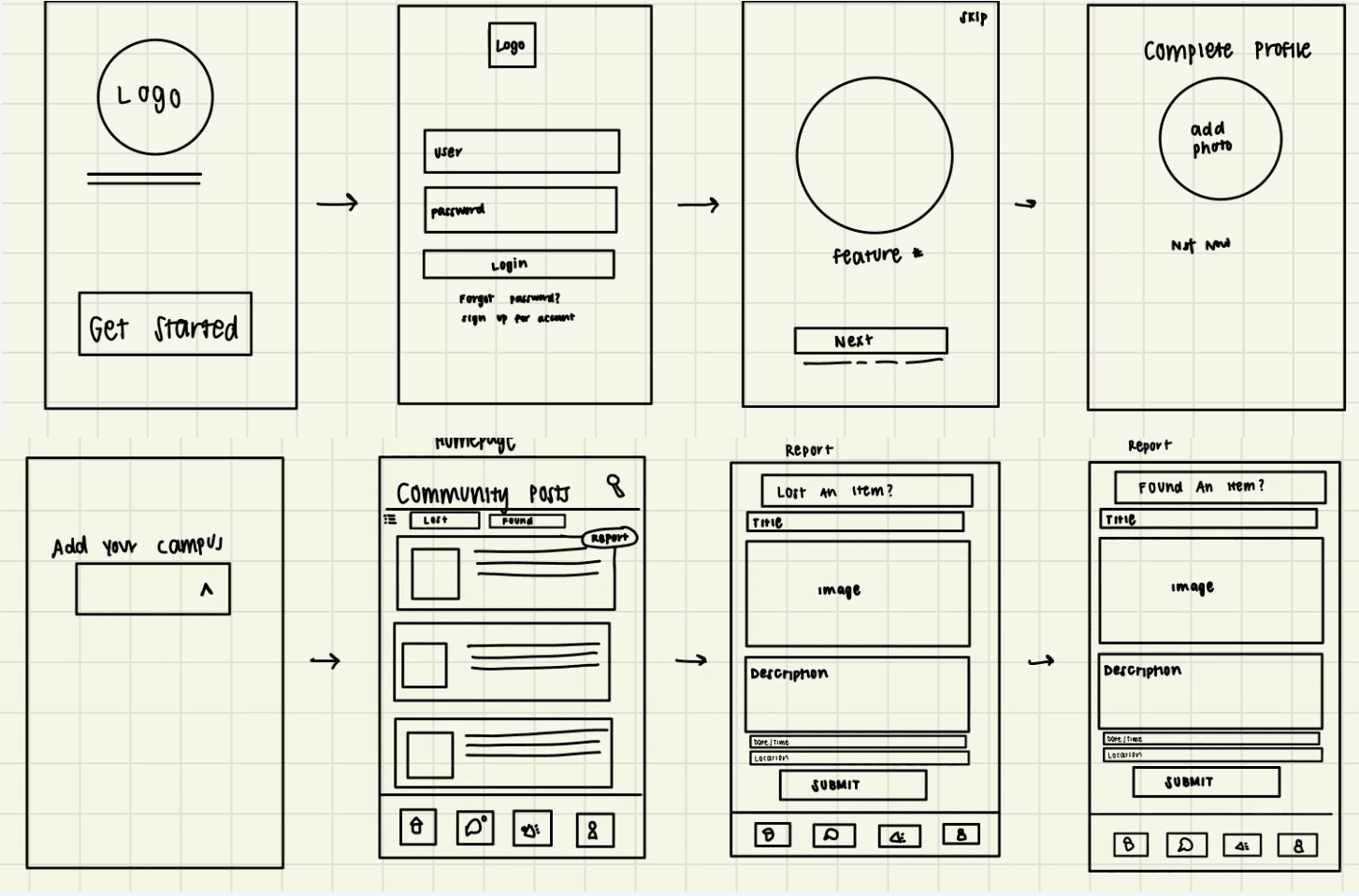
Wireframing & iteration
I created low-fidelity wireframes focused on simplicity and clarity, then refined the designs through early-stage user feedback to address usability issues.
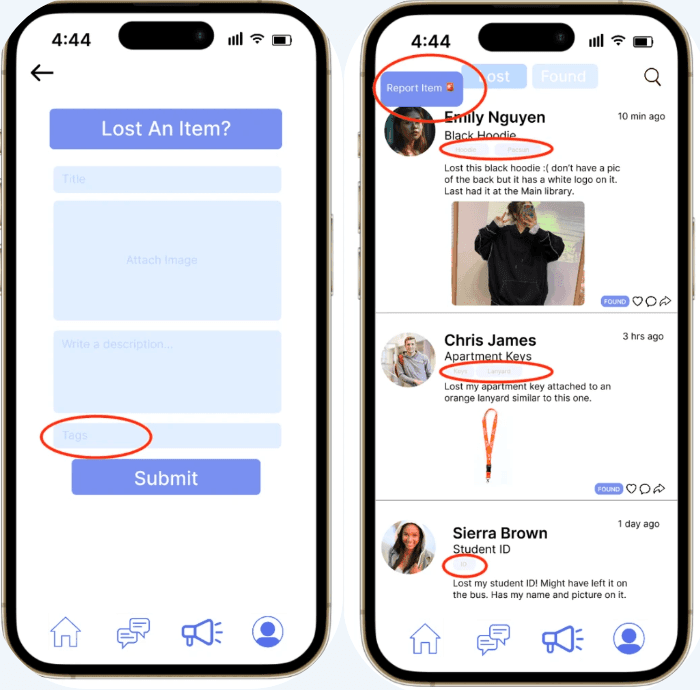
Solution
- •Centralized platform for campus-specific lost and found posts
- •Single ‘Report’ entry point to reduce home screen clutter
- •Tags to automatically match lost and found items
- •‘Found’ and ‘Claim’ actions to streamline item recovery
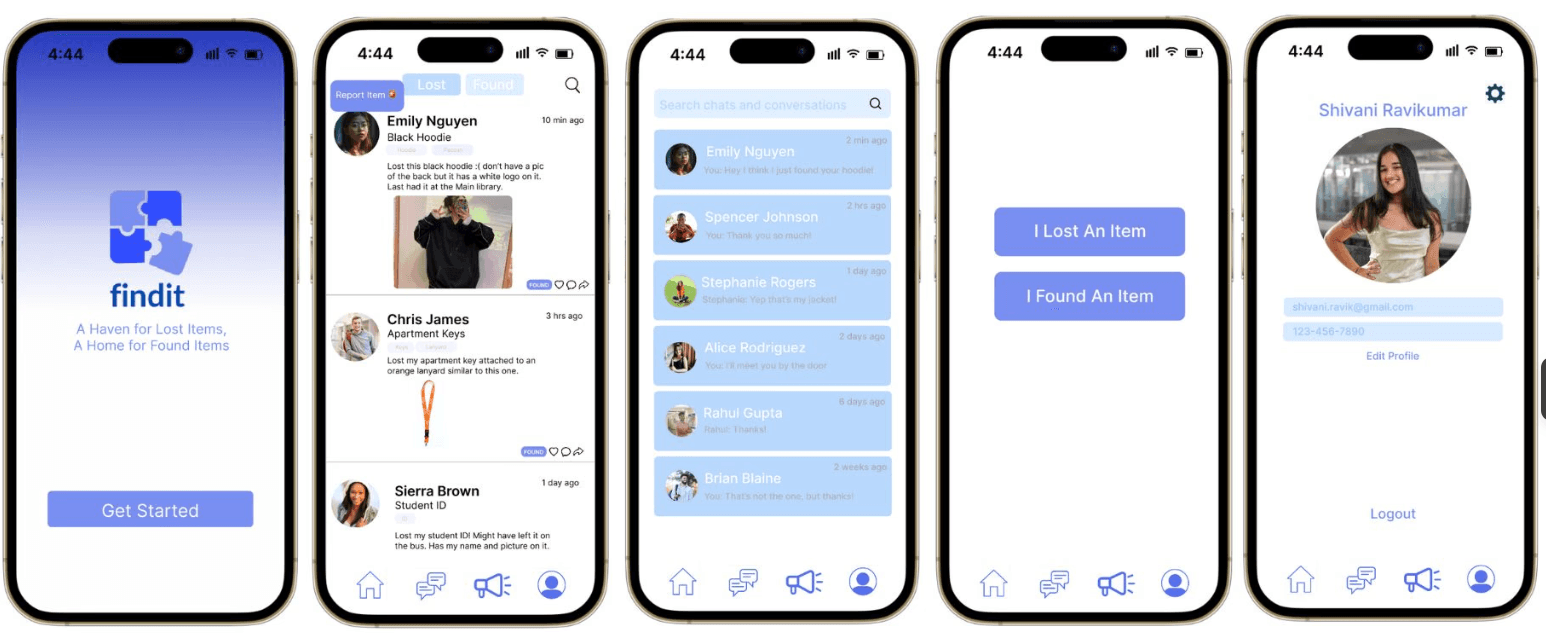
Final screens
The final design supports fast reporting, browsing the community feed, messaging, and a lightweight profile experience.
Reflection
This project reinforced the importance of continuous user testing and designing solutions grounded in real user behaviors and constraints.